
PART 4 — GONE OR LIVING INSIDE THE TRAP
Some characters don’t change — they just find more sophisticated ways to escape themselves. In this section, the question is no longer who they are, but who they are trying not to be. Because most of the time, a person doesn’t become someone new; they just try to move away from who they used to be. But if what you’re running from is yourself, distance is never enough.
In these stories, escape isn’t a solution; it’s a postponed confrontation. Identities split, roles are created, masks are worn. Everything seems under control. But that sense of control is only a delayed collapse. Whatever is suppressed eventually returns — harsher, clearer, more destructive. The most critical moment remains the same: the instant the system cracks. Characters, unwilling to admit they’ve lost control, try to control even more. They perform more, hide more, suppress more. But every move turns escape further into a trap.
Because some masks don’t protect you. They imprison you.
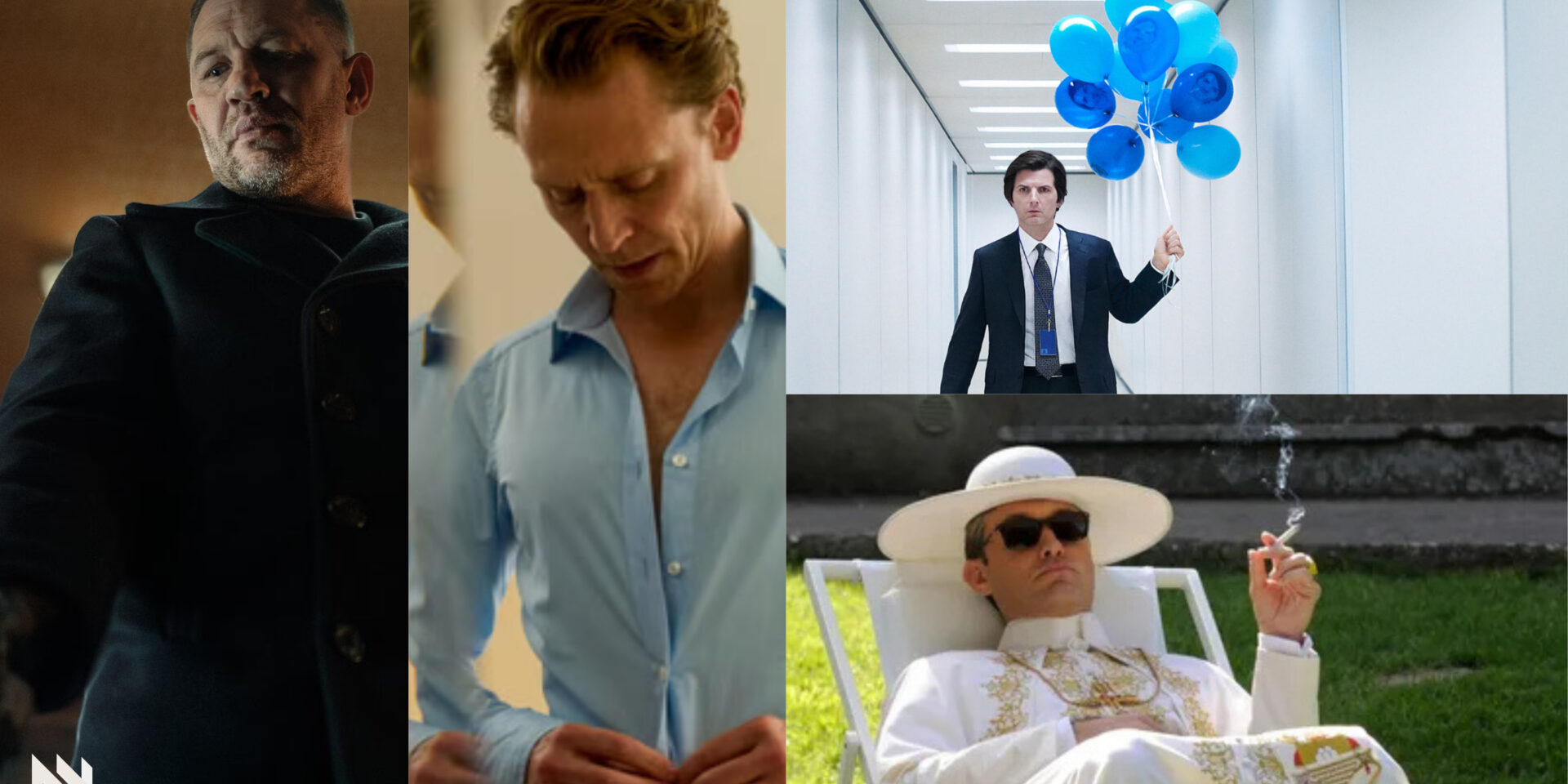
The Young Pope (Lenny Belardo / Pius XIII)
Lenny Belardo’s story is not about escape, but concealment. He doesn’t run — he disappears. He hides behind sanctity, builds power through distance and inaccessibility. He appears to be the man closest to God, yet internally he is farthest from himself.
Lenny’s greatest need isn’t faith — it’s control. The more distance he creates, the safer he feels. Because closeness means vulnerability. And vulnerability is his greatest fear. That’s why he rejects love, cuts off connection, chooses isolation. But this isolation isn’t a choice; it’s a defense. The feeling of abandonment from his past shapes every decision he makes. Faith isn’t an end — it’s a tool. To create order, impose meaning, control others… all of it is an attempt to manage the void within.
Lenny’s tragedy is this: no matter how powerful he becomes, the void remains. Because the issue isn’t God — it’s absence. And absence cannot be filled with authority. Watching him reveals an uncomfortable truth: even absolute power cannot fill the emptiness inside a person. And sometimes, what appears most sacred is built on the deepest fears.
The Night Manager (Jonathan Pine)
In Jonathan Pine’s world, escape begins with changing identity. He is not a character — he is a performance. He adapts to every environment, speaks accordingly, behaves accordingly. But that flexibility becomes dangerous over time. Because someone who constantly performs eventually loses track of what is real.
At first, Pine is in control. He knows what he’s doing and why. But as the role extends, the line between reality and fiction blurs. Lying becomes easier, manipulation becomes normal, distance disappears. He’s no longer just deceiving others — he starts believing in the identity he created. The most dangerous point is success. The better Pine performs, the deeper he goes. And the deeper he goes, the less likely he is to return. At that stage, the problem is no longer getting caught; it’s losing himself.
Pine’s tragedy is simple: the persona he created to escape becomes his only reality. And that reality is no longer something he can control. Watching him raises an uncomfortable question: how long can someone deny who they are? And at what point does that denial become a new identity? His story tells us this: some escapes don’t protect you. They erase you.
Severance (Mark Scout)
Mark Scout’s story begins like an escape plan, but it is actually a controlled fragmentation. Knowing he cannot eliminate pain, he chooses to divide it. The self at work and the self outside. The “innie” remembers nothing; the “outie” carries everything. In theory, it’s a perfect system: a space purified of pain. In practice, it splits a person into two incomplete halves.
Mark’s tragedy isn’t forgetting — it’s never being whole. The innie searches for meaning because it is incomplete; the outie grows exhausted under the weight. They are unaware of each other, yet carry the same void. That’s what makes the system fragile. Because the human mind isn’t sterile. What is suppressed always finds a way back.
As the story unfolds, it becomes clear: control is just delayed confrontation. Mark thinks dividing himself will help him manage his pain, but he only stretches it across time. Inside, a search for meaning begins; outside, unrest grows. As the two worlds start to overlap, the system begins to crack. The critical moment comes when both versions touch the same truth. Because that’s when the illusion of escape collapses. Mark never escaped anything — he only fragmented himself to survive.
His story tells us this: you can’t save yourself by splitting who you are. You only change which part suffers more.
MobLand (Harry De Souza)
In Harry de Souza’s world, there is no escape — because there is no alternative to escape into. He was shaped inside the system, learned its language, mastered it. What separates Harry from others is not just that he lives within this order, but that he understands it. He doesn’t act on impulse; he acts with calculation.
From the outside, Harry seems unbreakable. Calm, controlled, distant. But this control is not natural — it’s deliberate suppression. He doesn’t erase emotions; he renders them nonfunctional. He avoids connection because connection is risk. He avoids trust because trust means losing control. His strength doesn’t come from violence, but from knowing when not to use it. But this distance is unsustainable. Because what he suppresses isn’t just anger — it’s his humanity. And the deeper humanity is buried, the more violently it returns.
Harry’s tragedy is this: he is the one who sets the game, but he cannot leave it. He directs others, but cannot redirect himself. Because the system he exists in is not his choice — it’s just the cage he plays best in. Watching him reveals something unsettling: some people aren’t strong. They’ve just buried their emotions deep enough. And what is buried always resurfaces.