
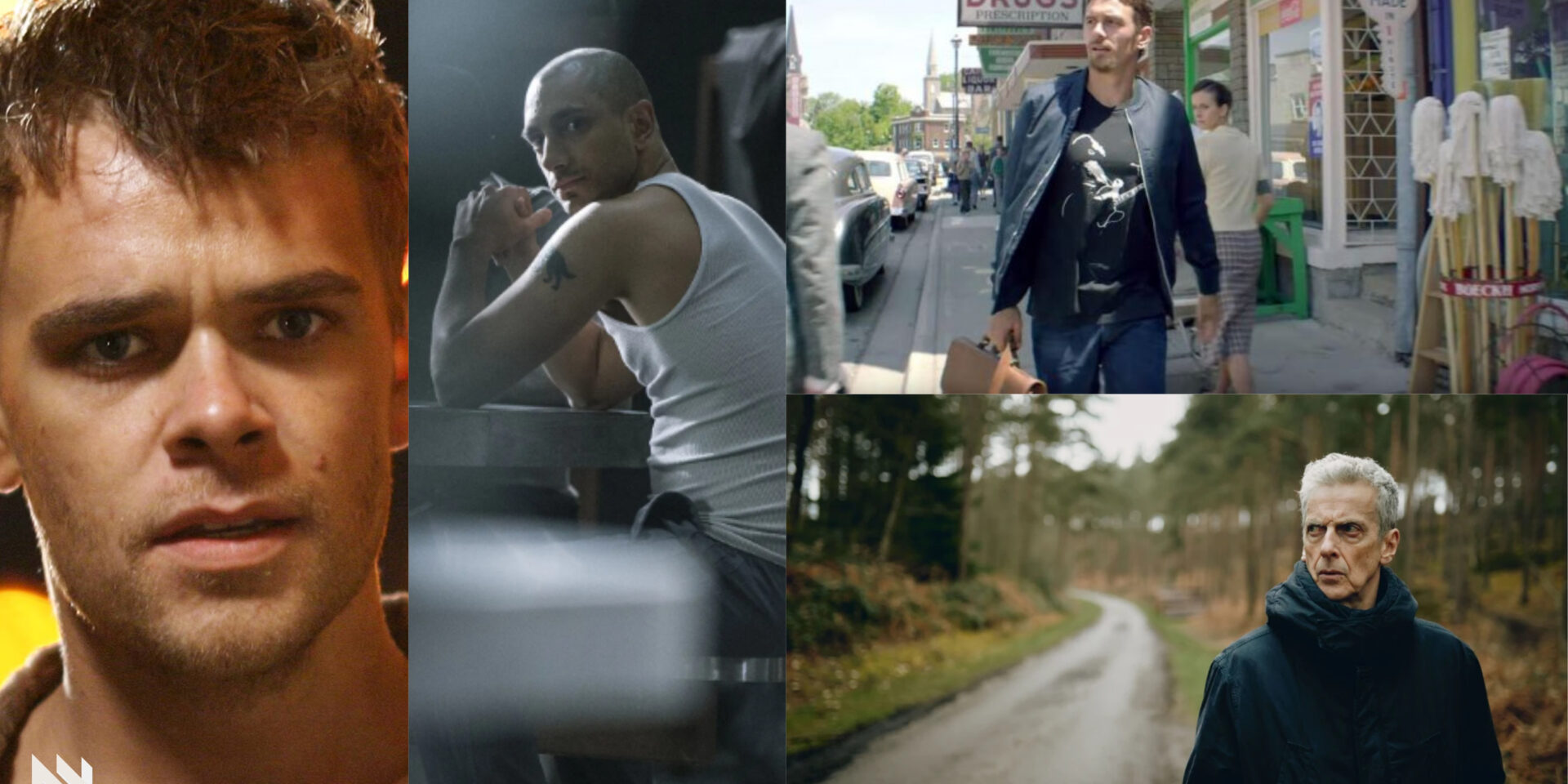
PART 5 — THE WEIGHT OF FATE
Some characters believe in free will. Others believe fate is nothing more than an excuse. But some stories always return to the same question: are we truly making choices, or are we simply walking a path that was written long before we arrived?
In this chapter, the characters are not trying to escape their past, reinvent themselves, or take control of a broken system. Instead, they find themselves trapped inside forces far greater than their own desires. One sees the future, another tries to rewrite the past, one discovers a destiny he never asked for, and another is transformed by circumstances beyond his control. Yet the outcome remains the same: every choice carries a cost.
At the center of these stories lies not freedom, but limitation. How much can a person really change? How much of life is shaped by will, and how much by forces already in motion? And at what point does resistance stop being a fight against fate and become a process of accepting it? Perhaps the most unsettling truth is this: some battles are not meant to be won. They exist to reveal who we really are.
Carnivàle (Ben Hawkins)
Ben Hawkins’ story is not about discovering that he is special; it is about carrying the burden that comes with it. In most stories, a hero becomes freer as he learns who he is. For Ben, the opposite is true. Every truth he uncovers places a new weight on his shoulders and narrows his choices even further. This is why Carnivàle is not a story about gaining power, but about inevitable destiny, growing responsibility, and the burden of identity.
Ben’s central conflict is not between good and evil. It is between himself and what he might become. He fears not the darkness around him, but the possibility of finding a part of himself within it. Every step he takes away from his fate somehow leads him closer to it.
The unsettling power of Carnivàle lies in this contradiction. While Ben believes he is making choices, he is actually moving within a much larger design. Over time, one truth becomes impossible to ignore: some people do not choose their destiny; they only choose how long they can resist it.
11.22.63 (Jake Epping)
Jake Epping’s story is not really about changing the past; it is about refusing to accept loss. The opportunity to travel through time offers more than a chance to rewrite history—it offers a chance to erase regret. Yet Jake’s greatest obstacle is not history itself, but his own desire for control. At the heart of his journey are the need for control, confronting loss, and the cost of acceptance.
At first, everything seems simple. One intervention appears capable of creating a better future. But as events unfold, Jake discovers that every change creates new consequences and every correction opens the door to another fracture. The past becomes more complicated the harder he tries to reshape it.
Jake’s tragedy is not failure. His tragedy is being forced to accept that some things cannot be fixed. Sometimes the hardest choice is not continuing the fight—it is learning to let go.
The Night Of (Nasir Khan)
Nasir Khan’s story is not about guilt or innocence. The real question is whether a person can remain the same after being consumed by a system. That is where The Night Of finds its power. It is less a crime story than a story of transformation, built around the erosion of innocence, adaptation to the system, and the reshaping of identity.
Naz begins as an ordinary, vulnerable young man. But the system refuses to leave him unchanged. To survive, he must learn, adapt, and transform. With each passing day he becomes harder, more cautious, and increasingly distant from the person he once was.
By the end, the mystery of the crime matters less than the cost of survival. The lingering question is simple: how much can a person change before they become someone else entirely? Some systems do not punish people—they remake them.
The Devil’s Hour (Gideon Shepherd)
Gideon Shepherd’s story is not about seeing the future; it is about recognizing a reality that keeps repeating itself. Most people imagine knowledge as power. Gideon understands that knowledge can also be a burden. At the center of his character are inevitable repetition, the weight of awareness, and profound isolation.
What he experiences is not prophecy. It is the realization that the same patterns, mistakes, and outcomes continue to return. This places him at a distance from everyone around him. He senses consequences before they arrive, yet often finds himself unable to prevent them.
Gideon’s tragedy is not failure—it is being right. Some truths do not set people free; they leave them alone. And sometimes the heaviest burden is not knowing what is coming, but knowing that no one else can see it.