
PART 2 — MASKS AND FRACTURES
And as I said before, what really pulls me in is the moment the system breaks. That first second when the order cracks. First, a universe is built where everything works flawlessly: the rules are clear, the roles are assigned, the balance of power is stable. Then a mistake happens. A small lie, a repressed trauma, a wrong decision… and the dominoes begin to fall.
That’s my favorite moment: when the system tries to protect itself and, in doing so, exposes itself. Characters harden because they refuse to admit they’re losing control. The more power they gain, the more panic grows underneath. The tighter the mask, the clearer the cracks. No structure is perfect; it only appears perfect until the moment it fractures.
In these series, what we watch isn’t just individual collapse, but the slow internal decay of a structure. The legal system, a crime empire, the myth of the detective, the illusion of control itself… Each is first presented as solid ground, then the emptiness beneath is revealed. And the characters realize something terrifying: the structure they thought they controlled is actually the cage shaping them.
That’s where the story truly begins for me. When order collapses. When rules bend. When a person acts against themselves. Because chaos isn’t always destruction. Sometimes it’s the only moment when truth becomes visible.
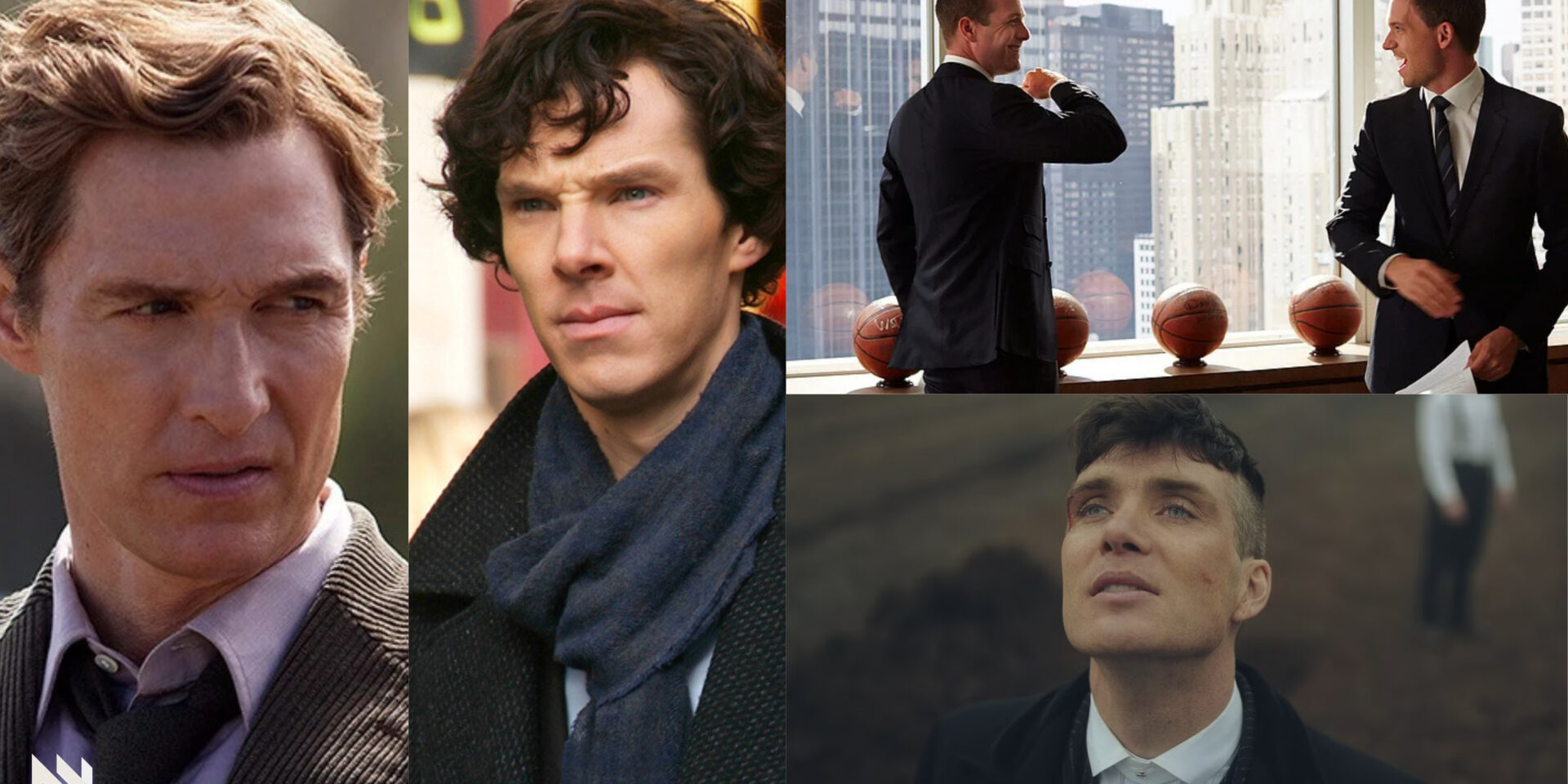
Suits (Harvey Specter & Mike Ross)
This story isn’t about winning cases. It’s about two men lying to their own identities.
Mike Ross isn’t afraid of getting caught. Getting caught is fear; what he feels is deeper than that. He’s not just a fraud — he’s someone desperate to belong. Every case he wins is an attempt to prove to himself: I deserve to be here. But every victory inside the system only makes the lie bigger. His photographic memory looks like a gift; in reality, remembering everything means constantly reliving his own deception. Mike’s collapse isn’t legal. It’s psychological. Because at some point, you don’t get tired of hiding from others — you get tired of hiding from yourself.
Harvey Specter doesn’t represent power; he represents addiction to power. Winning isn’t a habit — it’s a defense mechanism. He knows that if he loses, he’ll be alone. So he controls everything: people, cases, emotions. But the higher he climbs, the more isolated he becomes. Harvey doesn’t break when he loses. He breaks when he realizes he actually cares about someone. Because the system he built on control cannot survive vulnerability.
The real question of Suits is this: If your identity is built on a lie, is any victory truly a victory?
Sherlock (Sherlock Holmes)
Sherlock Holmes can solve anyone — except himself.
You admire him because he’s sharp, fast, seemingly flawless. But his greatest flaw isn’t his intellect; it’s his intolerance for emotion. He treats people as data. Empathy feels like unnecessary weight. He’s alone — but he tells himself it’s by choice.
In “The Reichenbach Fall,” the issue isn’t strategy. It’s ego. Facing Moriarty, Sherlock sees a mirror. The difference is simple: Moriarty has no brakes. Sherlock believes he does. That rooftop moment isn’t a battle of intelligence — it’s a collision of identities. Sherlock doesn’t fear death. He fears losing control.
Sherlock’s greatest case was never a murder. It was this: Does learning to be human mean losing the very thing that makes you exceptional?
Peaky Blinders (Thomas Shelby)
Thomas Shelby looks like he wants power. What he really wants is silence.
He returned from war alive, but not whole. Every plan is precise, every move calculated — because if he stops controlling things, he might fall apart. Power isn’t about money or status. It’s about numbing the emptiness inside him.
Tommy’s tragedy is simple: the higher he rises, the more alone he becomes. He distances himself because attachment feels like weakness. But that distance is the real weakness. His most dangerous moments aren’t gunfights — they’re the quiet scenes where he sits alone with his thoughts. Because in those moments, there are no enemies. Only his own mind.
Peaky Blinders isn’t a gang story. It’s the story of a man masking trauma with power. And as power grows, trauma doesn’t shrink — it just becomes quieter.
True Detective (Rust Cohle)
Rust Cohle doesn’t romanticize darkness. He accepts it.
When he says, “Time is a flat circle,” he isn’t trying to sound profound. He’s exhausted by humanity’s endless repetition of the same mistakes. His nihilism isn’t a philosophy — it’s fatigue. He stopped expecting hope a long time ago.
What makes him unsettling isn’t his intelligence — it’s his honesty. He refuses to hide the rotten parts of human nature. He forces you to confront what you’d rather ignore about yourself. That’s why he’s hard to love.
In the final scene, when he suggests that maybe the light is winning, it’s not enlightenment. It’s just a crack in the darkness. Rust doesn’t transform completely. But for the first time, he admits the darkness isn’t absolute.
True Detective isn’t about solving a crime. It’s about a man learning to coexist with the dark — without letting it swallow him whole.